Stop it George. Can't you leave a perfectly good movie alone.
I understand your desire to fix an effect that didn't work back then like making the Ewoks blink but adding in a new line to the movie decades after it was filmed is simply wrong. Darth Vader is the strong silent type. Do you know what the strong silent type does? Kick butt. Do you know what he doesn't do? Get emotional and yell, "Noooooooo!".
Thursday, September 1, 2011


Wednesday, August 31, 2011
I think we can forget about those 3 points now

When I first read the tournament results from the 2011 NOVA open my first thought was "AGAIN!" In case you haven't heard Tony Kopach won it again. I can hardly blame you if the name doesn't ring a bell. After all these games aren't on ESPN and not everyone follows tournament results. He is the 17 year old kid who won* the NOVA open last year and the Adepticon Nationals this year. He is also the one who won last year's NOVA open with a list that was 3 points over.

At this point mentioning those 3 points is old news. He fully redeemed himself at Adepticon by proving he can earn a solid highly competitive tournament win. Yet those 3 points are a fact and this win should finally put that controversy to rest. Continued bitchen about these 3 points is nothing more than jealousy and useless ranting. The simple fact is he went 8-0 with 16 total "perfect" games at both the NOVA open and Adepticon vrs the best competition in the world. He had 24 "perfect" games if you include last years NOVA open.
The only thing I have left to say is, "Congratulations Tony Kopach, you're the best 40K player in the world today".

Tuesday, August 30, 2011
Cosplayers; a few rules to follow

If you've ever heard me on TEW, read my blog posts there, or even friended me on facebook you probably know that I love cosplayers. I have just as much fun taking their picture and asking about their questions as they enjoy people taking their picture and being asked about their costume. If you don't know what "cosplay" is then let me highlight you; cosplayers are people who show up to conventions in costume. Typically they pick a character from some type of media be it comics, TV, gaming, etc....

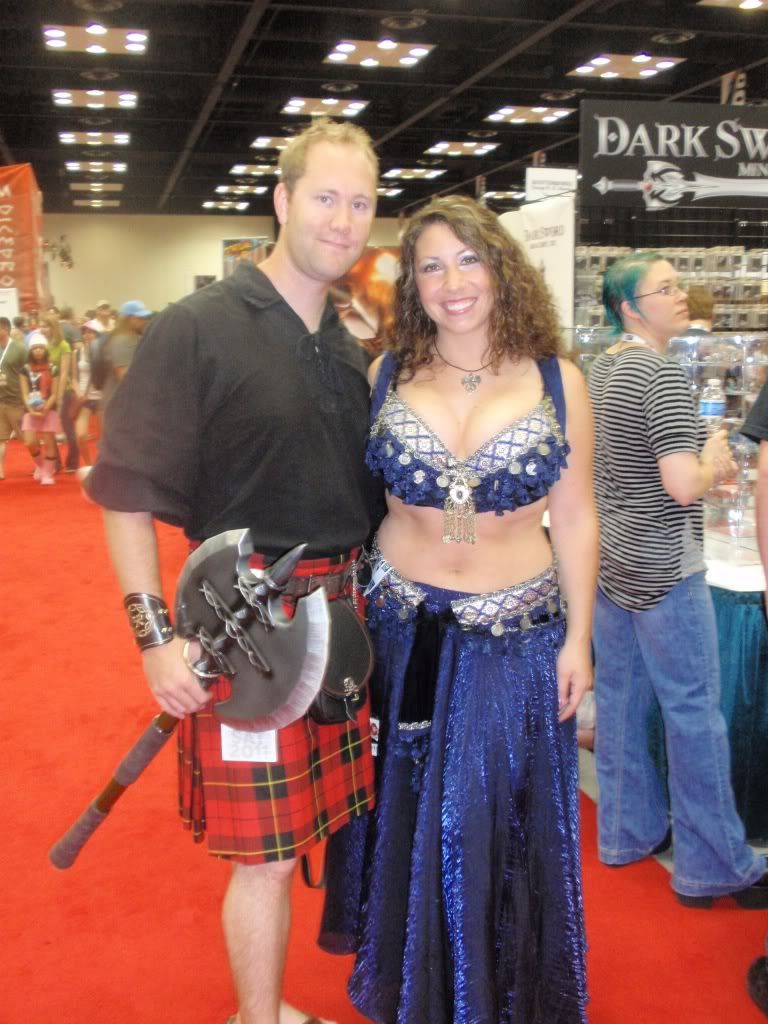
I'd say that the vast majority of cosplayers do it for the attention. I'll freely admit that this is a broad generalization that may not stand up to detailed scrutiny for 100% of all cosplayers but it most certainly applies to 99.9% of them. But just because they're there for "the attention" doesn't mean they're there for "bad attention". So as I post a few pics from GenCon 2011 for you to enjoy allow me to list off a few of my own personal rules that make the experience better for everyone and give you better pictures.
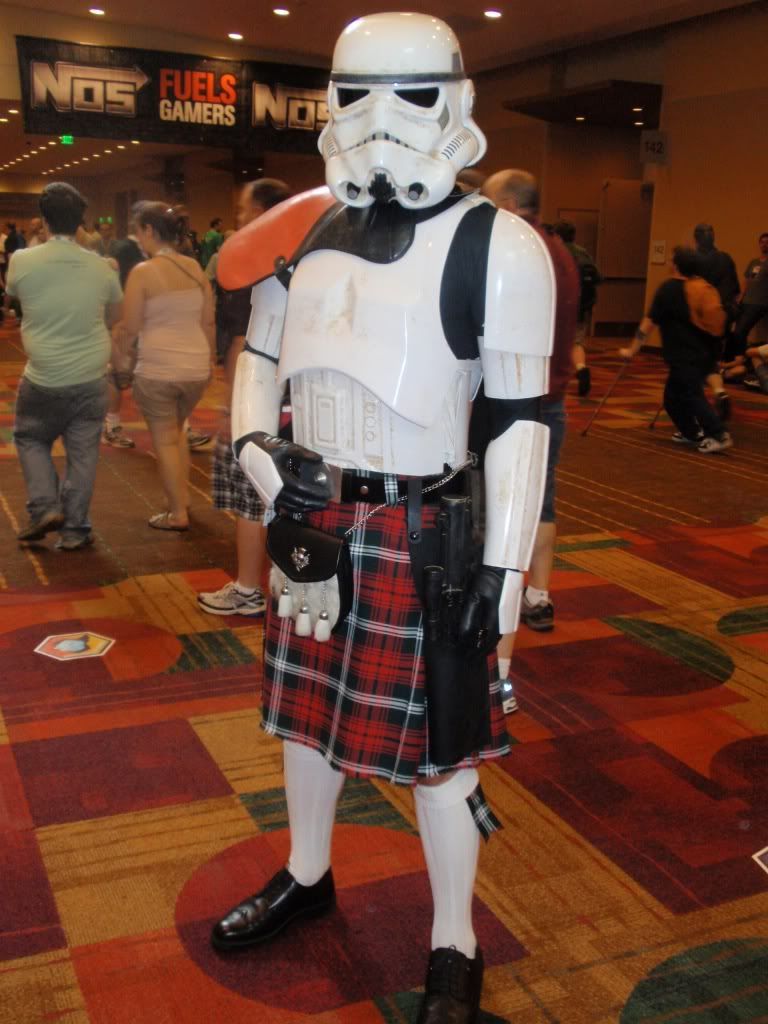
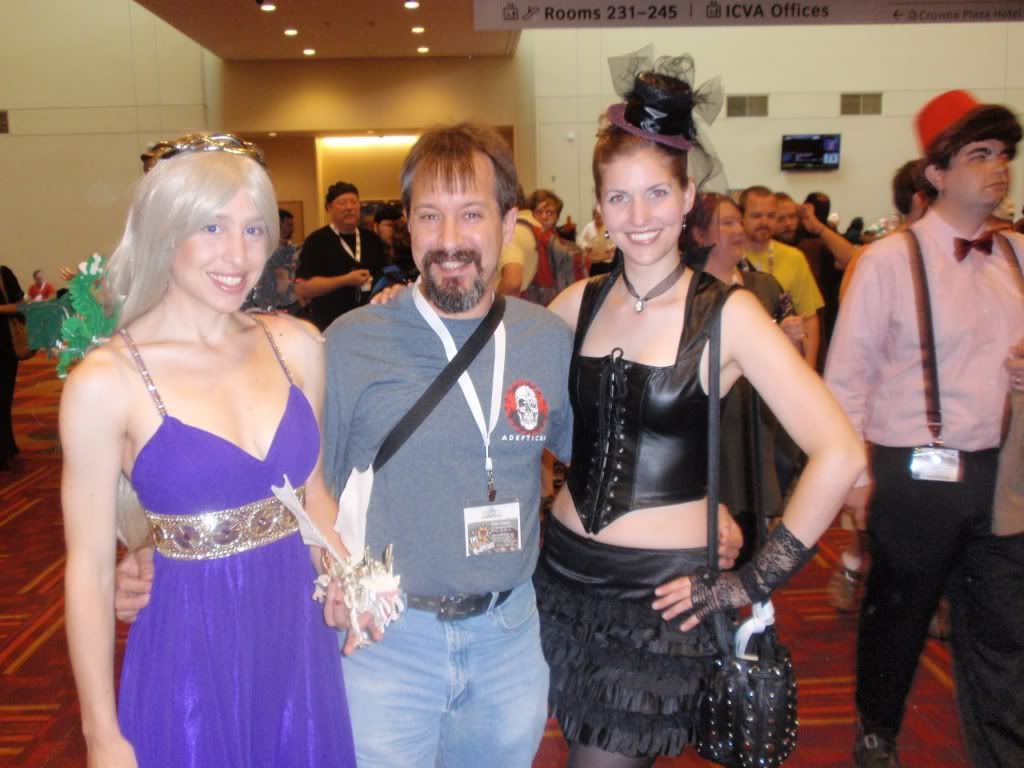
#1 Ask if you can take their picture; Just because they're in costume doesn't mean they're not human beings. While everyone around them may be snapping pics they still appreciate someone asking for their picture. If you want a good picture then you should ask them for one.
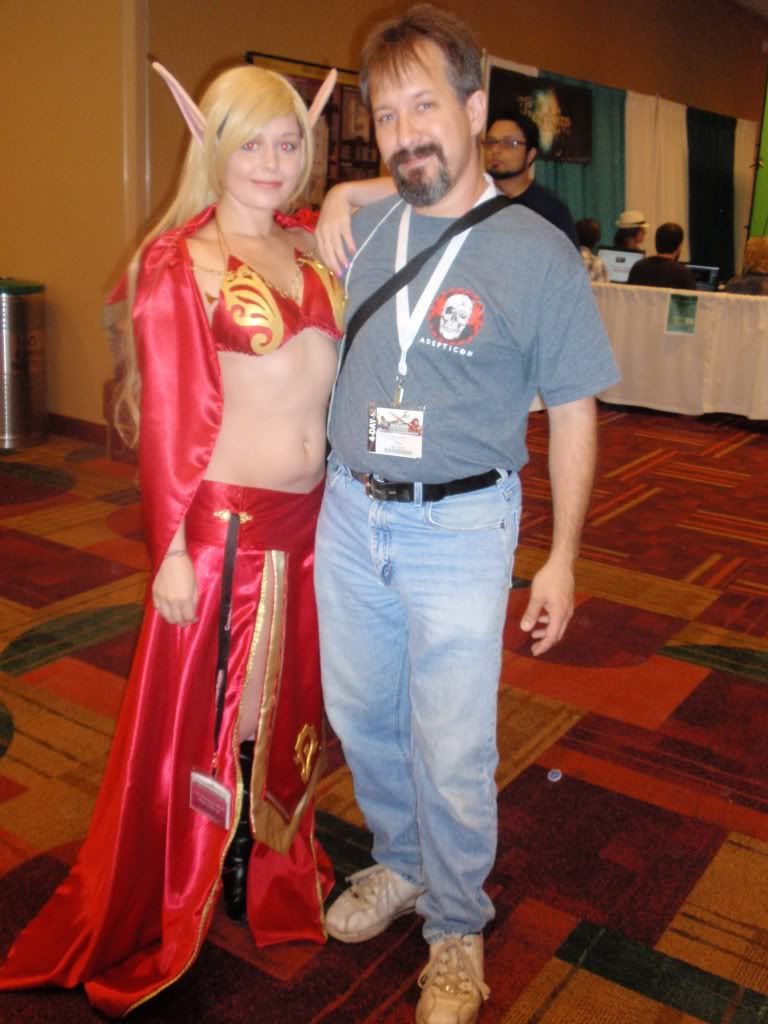
#2 Ask to be in the picture but don't expect to be in the picture; This is another rule that centers on politeness. Don't assume that they don't mind your creepy butt sliding up to them ad getting a picture with your arm all over them. Once again they're human beings. Let them take the lead, don't put your arm around them unless they put their arm around you first. If they don't then you shouldn't either.
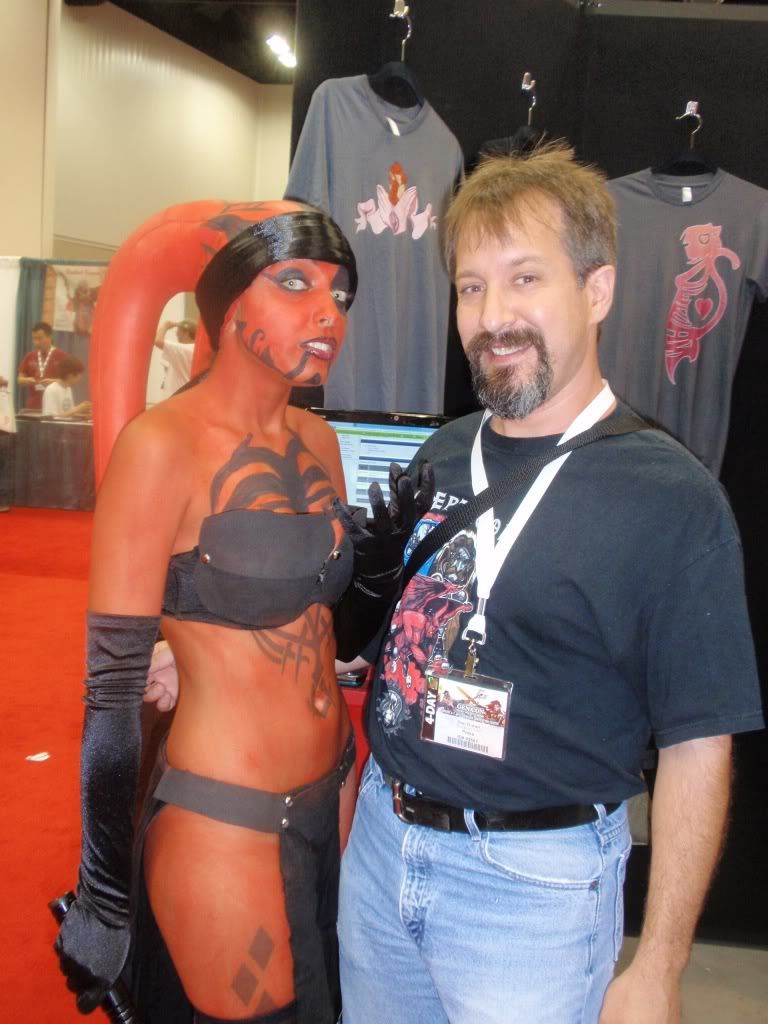
#3 Know who not to ask or to ask differently; There are just two examples; hot girls with jealous boyfriends and children. Both are trouble but can still be approached. If he's in costume too then ask him to pose with her. Don't ever ask him to step aside so you can press up against her.
Kids are a different kind of trouble. If you're creepy with them then you deserve the legal troubles that can happen. In this case ask mom and dad first. This is especially true if they're little kids.
If they're unaccompanied young teens then you have a new set of problems. Don't get in the picture with them, it's creepy. Don't do it. You absolutely must ask permission.

#4 Use enough camera; I suggest using a good digital camera with enough mega-pixels. A 3.2 mega-pixel camera will take good pics but you'll be limited in how detailed you can edit the photos later. Using a 9.0 or higher will allow you to crop out the background and zoom in on the part you want without any real loss of image quality. A 12.0 is ideal. Any higher mega-pixel and it will devour too much memory and take too long to take a follow up picture.
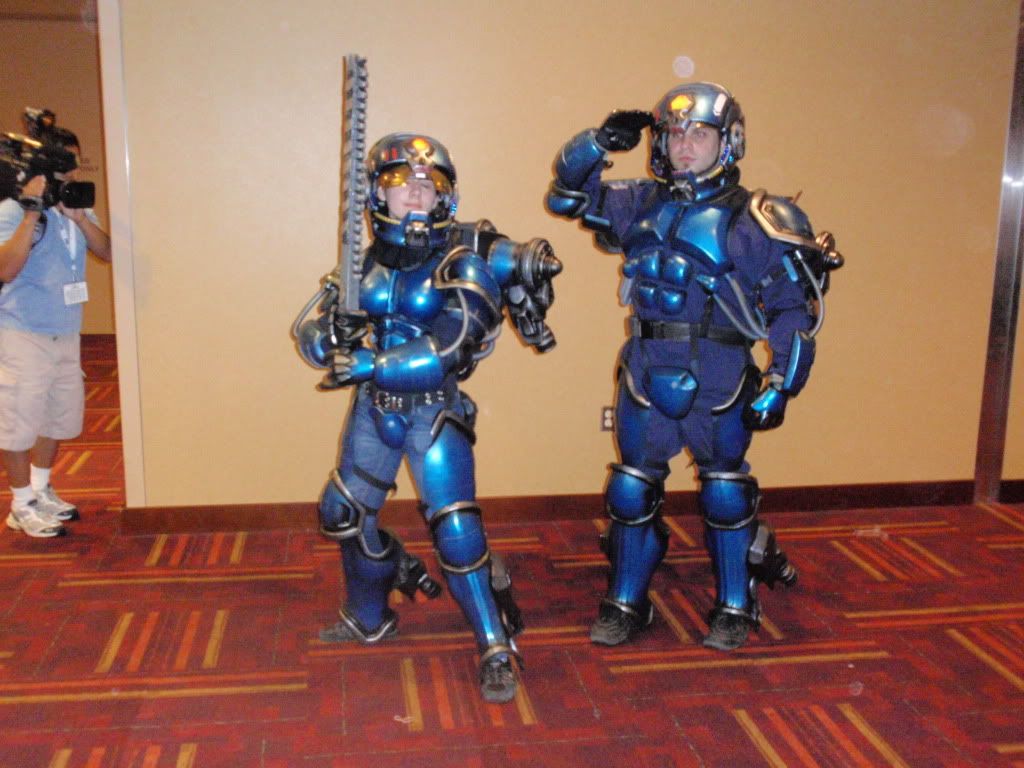
#5 Prepare that camera; Clear the old pics from the flash card, recharge the batteries, bring spare batteries, and clean your lens. This is quick and simple advice that will prevent you from deleting pictures, will allow that camera to take a new picture much faster, keep it clicking all day long, and makes sure your pics are as good as you can get them.
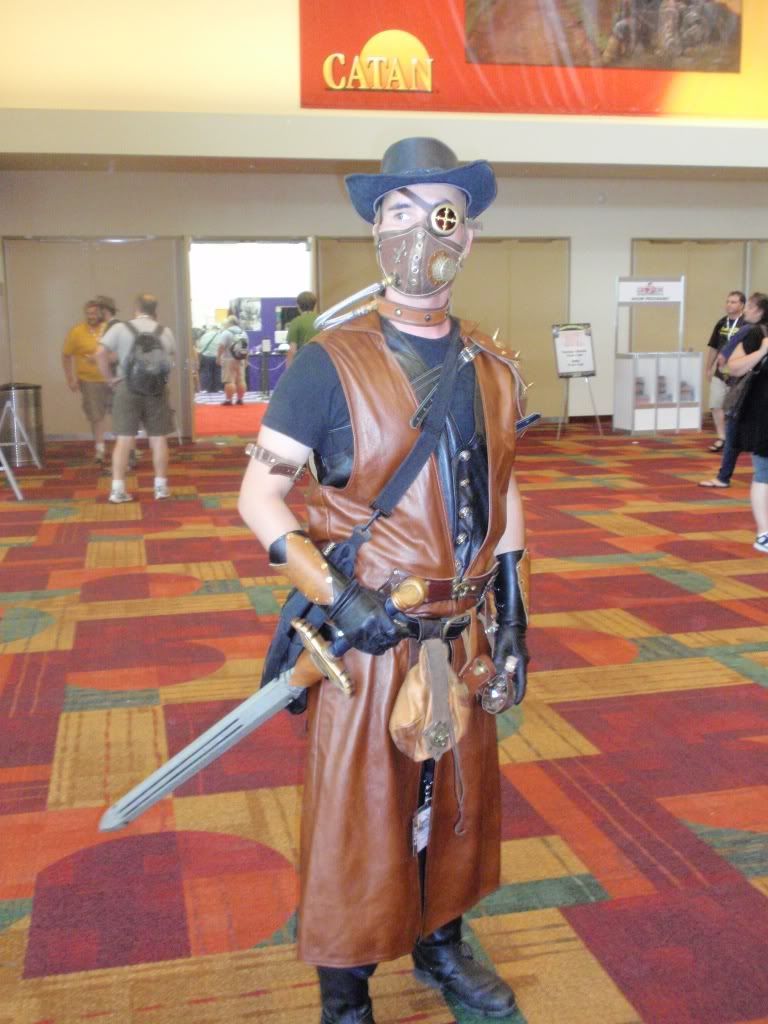
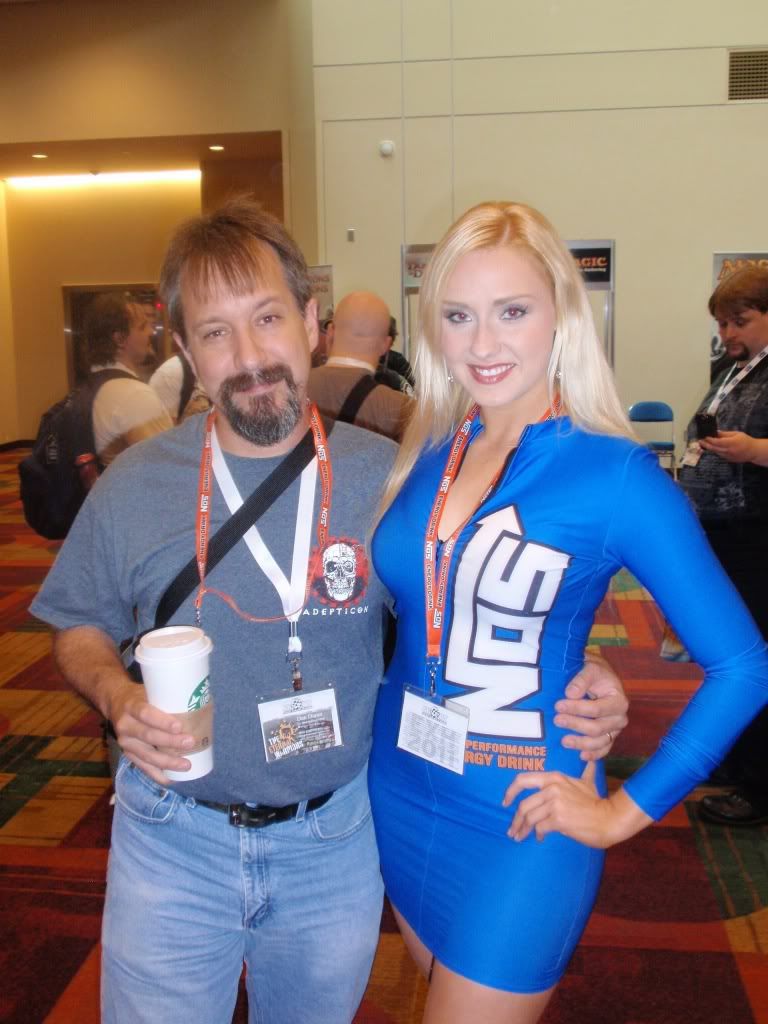
#6 Use a camera with a short focal length; Cons are crowded and rude people will get in front of you. Your best defense is to be in front of them. I don't suggest a fisheye lens but a 28mm should be enough to get you closer to your subject than the next paparazzi wannabe.
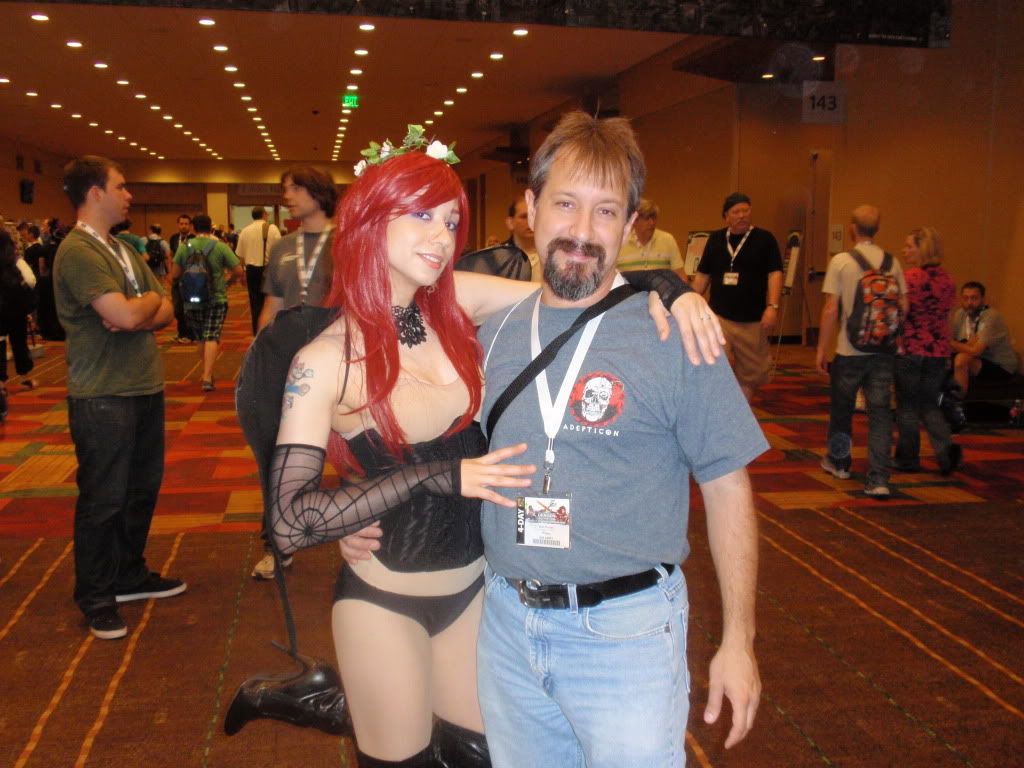
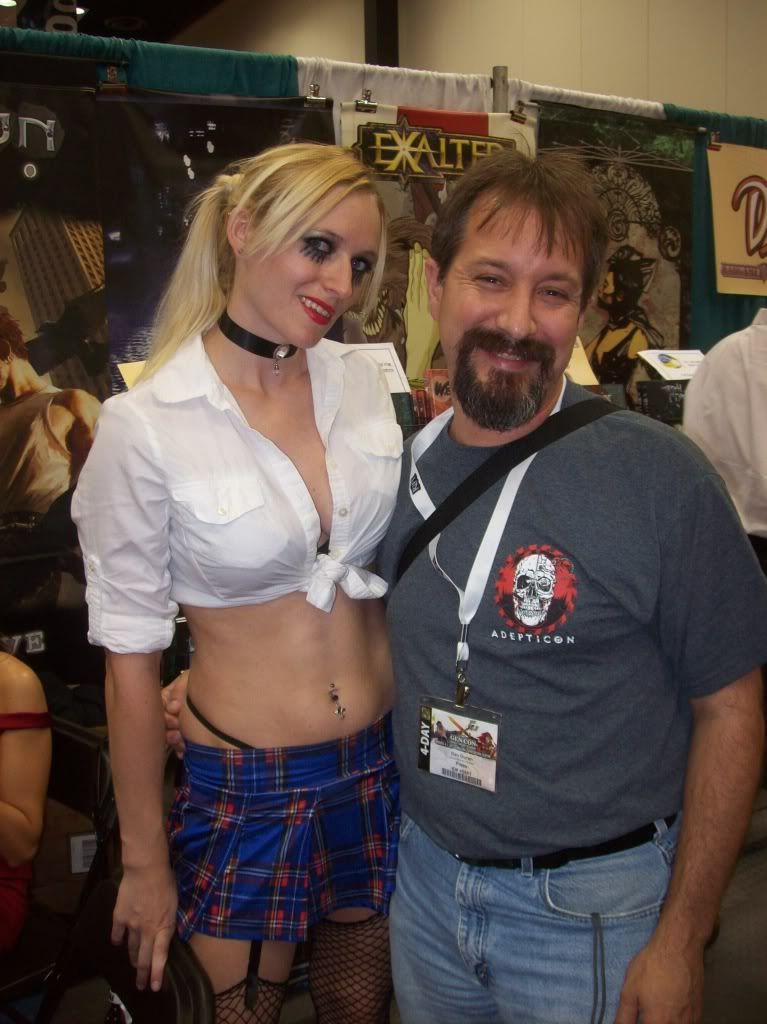
#7 Ask them to pose as their character; You'd be surprised how few times they're asked to do that. Typically all they do is smile for the camera so it's quite refreshing for them when someone asks them to pose in a unique and original manner.
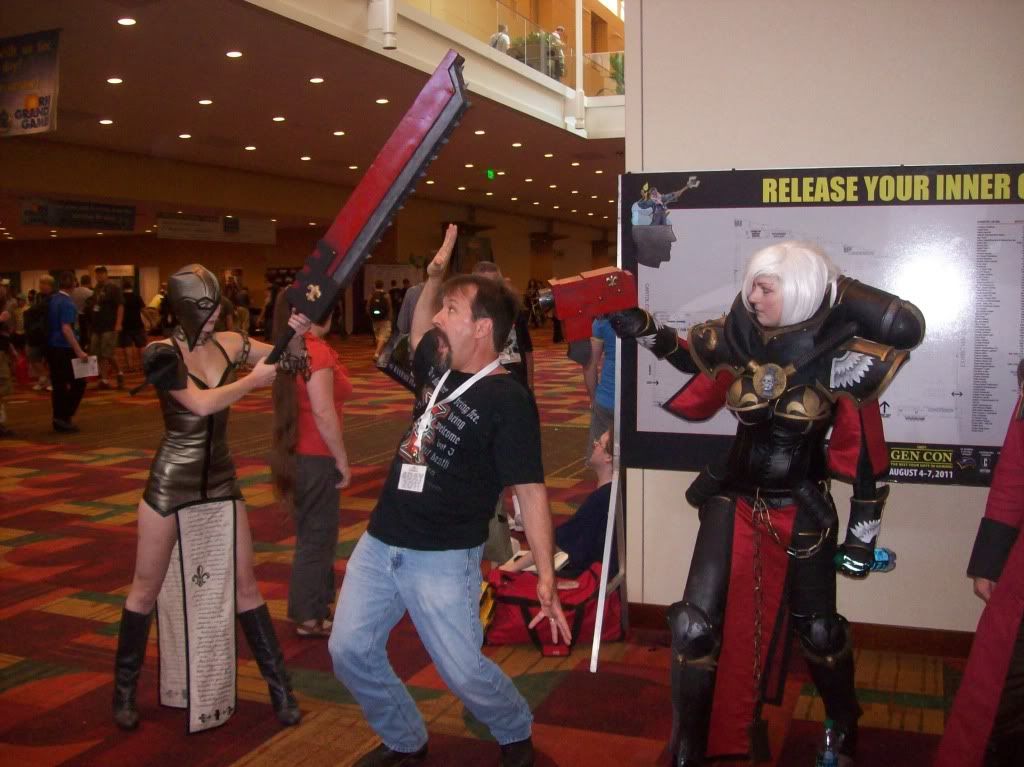
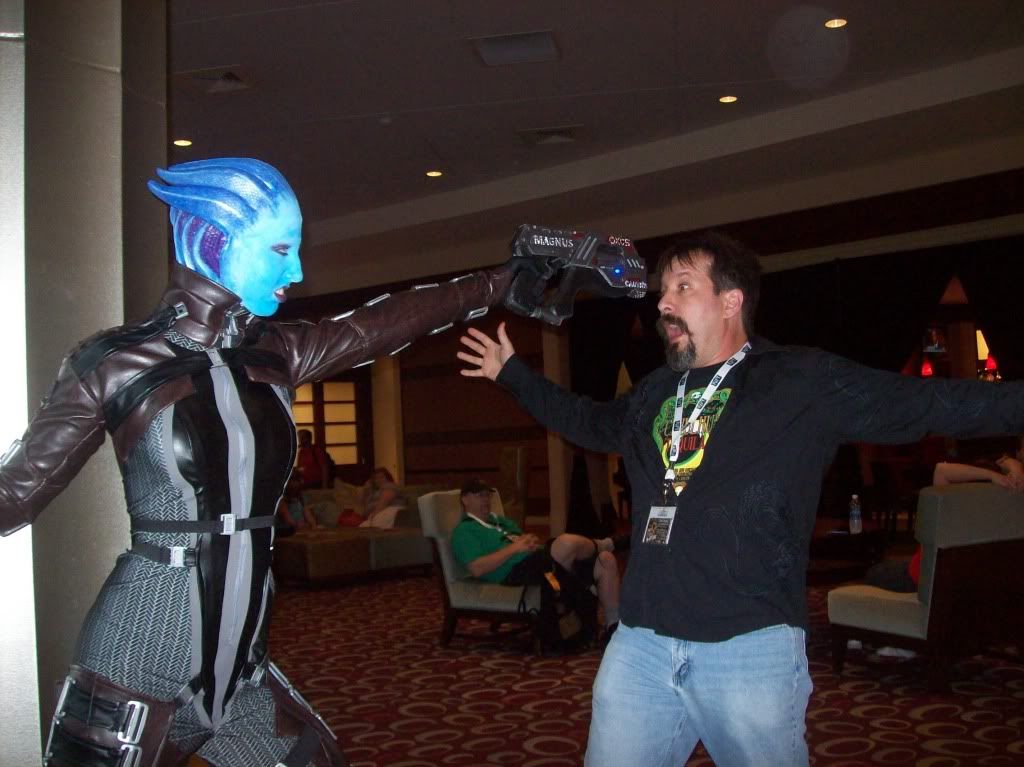
#8 Don't only take pictures of hot girls in skimpy costumes; Good cosplay is tough to pull off. If someone does it well you should reward them with the positive attention they deserve. I've found that the best cosplay costumes aren't on the hottest girls.
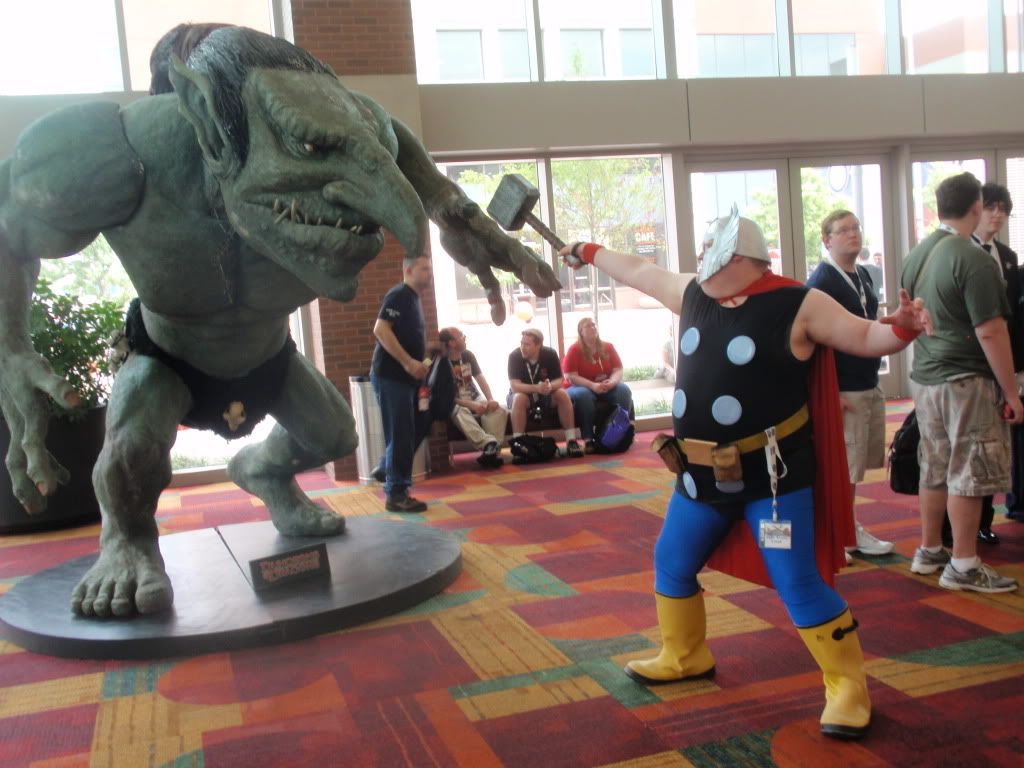
#9 If part of their cosplay is an act then you deserve it to them to play along; I've been sung to, I've been acted to, I've been followed and I've been hugged. Good cosplay is more than just an awesome costume on a hot body. A great attitude, a sense of humor and good acting completes the package.


Sunday, August 28, 2011
Thank you GW but it's not enough

It's been a well known fact for well over a year now that the Sisters of Battle were going to be given a White Dwarf update. We never knew exactly when but we knew that is was going to happen. Rumors (God I hate them) were inaccurate as always and the end result seems to be a lackluster effort. Allow me to explain.
Before the rumor of the WD Sisters codex update was leaked to us the staff of GW were working on it for almost a year. That leaves the finished result that is being printed in White Dwarf the end result of a 2 1/2 to 3 year effort. Please pardon my pessimism but I honestly can't call the finished product a productive use of designer time. That's more than enough time to design, playtest, and print a fully finished codex. I won't question the end result of the update but I am going to question the intention to publish a half finished effort.
Yes, I'm a critic. Yes, I've been an anti GW rant lately. No I'm not being unfair. If you're going through all the effort to make a new codex why on earth would you stop halfway through the project and publish something that's going to be replaced in less than a full year?
So now that I've said my peace allow me to contradict myself. This update makes White Dwarf worth it's purchase price. It also refreshes an army list that is old and years out of date from the edition it was written for.
Now that it's out I sort of wish GW would do the same for the Tau, Dark Angels and Black Templars. If they started now they could probably have all three ready and published before the end of the year. In fact I'd be perfectly happy if GW never printed another codex again and instead relied upon White Dwarf updates. If every issue had an update to one of their armies it would make White Dwarf relevant again.
Tuesday, November 9, 2010
Blasphemy or pretty damn funny?
What do I do at 2 am when i just can't sleep? I find stuff like this;
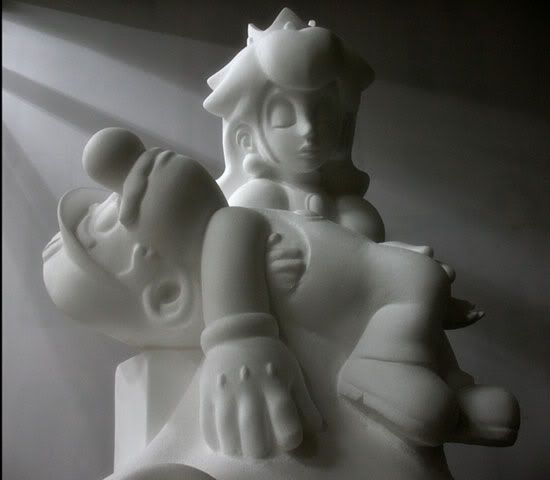

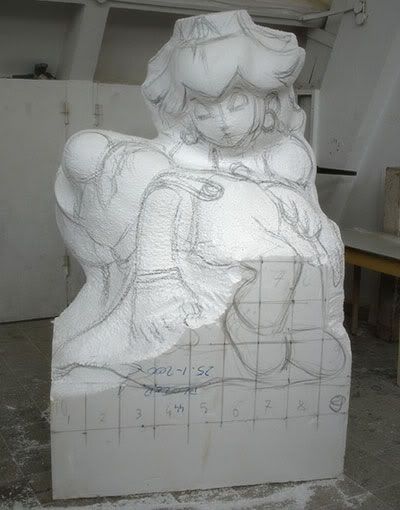




How can something be soo damn funny and yet a little bit blasphemous at the same time? I don't know and I really don't care. Mario as Jesus Christ and Princess Peach as Mary has a bit of comedy that you just can't ignore.
Come on guys, you have to love this. It's friggin funny as hell.
At the very minimum you have to appreciate the artists imagination. While some people may look at a piece of toast and see Jesus this guy looked at a huge block of foam and made his own Jesus. Not just that, he turned Jesus into Mario Jesus.
While my admiration for this guy and his bold imagination to turn a tragic event in the Christian faith into something we can laugh it I do draw the line somewhere.
No, this wasn't it.
Nope, still isn't it.
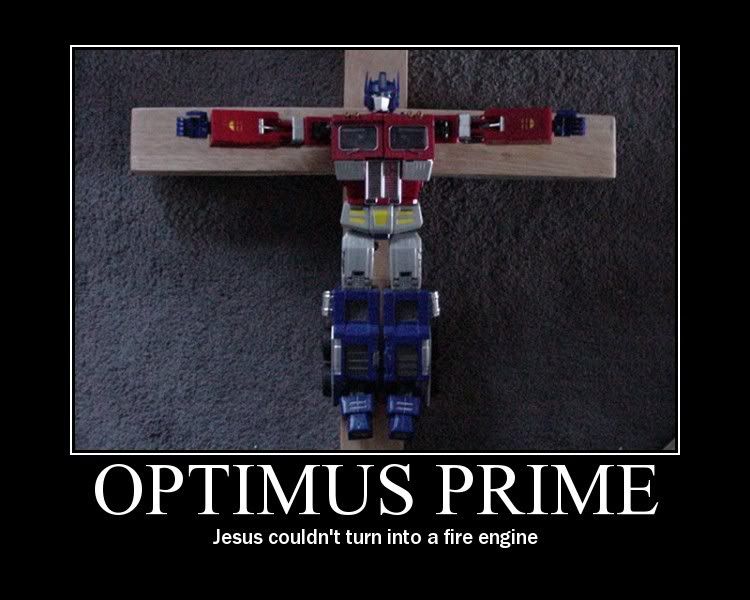
Closer but a crucified Optimus Prime is not it.
This douche bag on the other hand is where I draw my line.
For those of you who don't know who this jag off is then follow this link to the wikipedia page on him;
He is a hateful evil person who is in a hell of how own making.
Campaign Creation
Campaign are fun. They are far more than the basic definition, a series of games that have been linked together. They are a new challenge, a source of bragging rights, an inspiration for future projects, and an opportunity to try something different.
Of course, not all campaigns are the same. The 3 primary types are; Map, Tree (The results of one game
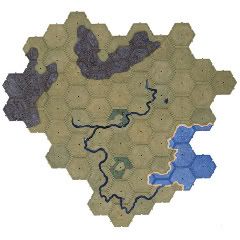 will determine the type of game and mission in subsequent games), and Ladder (A linear series of battles that do not deviate from the original plan). In addition to that limited definition of campaigns are subtypes that deal with other aspects. One is campaign conclusion; Is the campaign open ended, with a specific win condition, or with a planned conclusion? Another is Missions and Objectives; Are the games pre-generated in advance or determined as the campaign progresses? Does the results of one game effect later games? Player participation is also a critical aspect; How many people are in it and can people enter after it has begun? You also need to decide if the army composition is fixed or non-fixed; does the campaign require you to use certain units and keep your army list fixed or can everything vary from one battle to the next? What about a sideboard style where you can have a combo of both types.
There are various elements a campaign writer has to keep in mind that make a great campaign; A compelling story line has to be number 1 on my list. Anything that connects the storyline to myself and my army is what will make me want to keep playing the games. A sense of fairness and balance for everyone involved must also play a large role in the design of the campaign. Try to avoid the “steamroller” effect and vary the types of missions and deployments. Another critical aspect
is the inclusion of interesting battles that challenge the players in new and unique ways.
While it’s not necessary for a campaign to have a story line that links the games together, I’ve found that if before the campaigns starts you don’t already have story line that links the games together one will naturally develop one on its own. Don’t resist it if one does develop on it’s own. That’s part of what
makes a campaign fun and memorable.
Story line development is often quoted as the most difficult part of campaign writing. I find it the easiest
 and I can attribute that to being a DM in AD&D. In those types of games a good story line is critical. It is central to the game itself. But if you’ve never written a story line for role playing games then where do you find one? Story lines for campaigns are everywhere if you just look and use a bit of imagination.
My favorite source is the news. A recent example is the toxic sludge disaster in Hungary. To me, that sounds like Papa Nurge causing trouble. The first battle can be the initial opening of a massive warp gate, the second would be the rescue of stranded units, and the final battle would be a mission to close the warp gate. The recent news about the Quantis Jet making an emergency landing because of engine trouble can be converted to an Imperial starship having to make emergency repairs on an Ork infested planet that holds an old Mechanicus station. The first battle could be a forced entry into an occupied area, the second is gathering needed repair parts, and the last is evacuation after repairs have been made.
Those examples quickly rose out of my mind as I was writing and need to be fleshed out in greater detail but the basics of a good story line are there.
 History is another good source for a story line but it may take a bit of work and imagination to convert historical battles to something logical for a wargame deployment and mission. You may have to admit that some historical events and battles would make a boring campaign even if they were critical events in history. Move on to another historical event if they can’t be easily converted. Others, like Sherman’s March to the Sea from the American Civil War, just about writes its self for any campaign type. It’s series of major events and battles can be easily converted to the table top wargame.
Also look to fictional history to inspire a campaign storyline. Inserting your games into the greater storyline of the Sabbat Worlds Crusade that forms the backdrop of the Gaunts Ghosts series is
easy. After all, they aren’t the only regiment in the sector wide crusade. It’s easy for an Imperial Guard player taking the role of an un-detailed regiment in the books or simply replacing the Tanith 1st.
Another option is to use a random story line generator. Do a google search and I’m sure you’ll find dozens of sites for this. I admit that most of them are designed for role playing games but that does not mean that the inspiration can’t apply. Keep in mind that random charts for games don’t have to be used randomly. It’s perfectly acceptable to selectively pick the parts of these charts you want to use instead of letting the dice decide for you. It’s your game, use this material as you see fit.
One of the other, and most difficult to achieve, elements of a great campaign is a sense of fairness. You may have to accept that in a campaign it may be impossible to achieve perfect fairness in every game throughout the entire campaign. It’s the overall campaign that must be fair. Both players should have an equal opportunity to win.
Special campaign rules that favor one army over another can lead to an imbalanced campaign. Try to avoid this situation but accept that it may be necessary to imbalance an individual game to move the
campaign’s storyline along. An example would be to give a planetary invader an advantage to get them on the surface in the opening battle. The storyline would be silly for subsequent battles if the invaders were wiped out in the opening battle and never made it down to the planet alive.
Do this by allowing the defender a chance to win the scenario without actually winning the game. If one side has a huge battle advantage let the other side have an easy win condition. With the previous example I’d help the invader gain a needed story line foothold on the planet by giving his entire
army (including vehicles) “without number”. That would represent the continued reinforcement of additional troops an invader would need. To balance it out require the defender to keep a single specified model alive to win the scenario. This model could represent the planetary governor, a general, a great hero, etc….
Be careful of giving out too many or powerful rewards to one side after a winning battle. These rewards tend to stack and make that player even more difficult to beat in subsequent games. That player will end up steamrolling everyone else unfairly if the rewards become too numerous or too powerful. Consider giving rewards that don’t effect the very next battle, don’t stack, are very minor, or are balanced out
with special rules for the other side.
Players who are unable to tell the difference between a “win at all costs” type of game and a “story line” driven game are another huge problem. Those kind of players belong in a tournament where the intent of the game is to determine the best general. They will enjoy those types of games much more.
Another huge issue is the inflexibility of the players and the campaigns setting. Quite often the writer of the campaign doesn’t know the players, their playing styles, their army, the battlefield terrain or anything else that’s unique to your situation. It’s your game, feel free to change anything you see fit. Any of those situation can imbalance the campaign unfairly. If it’s not fair then change it so it is and restore the fun.
Some campaigns systems like Plantetary Empires give advantages to the looser (underdog) as a means of balancing the games. This allows players of various skill levels to still compete against one another and “forgives and forgets” bad and good luck that we all occasionally have. While the underdog rules can be cheated to give a player too many advantages the effect is minor and will balance itself out after a few games.
If you do decide to give the players advantages then keep them limited and relatively minor. Loosing shouldn’t be rewarded any more than a lucky win reinforced. As with everything else the advantages should be consistent with the storyline.
So now that you have a campaign story line and a sense of fairness how do you build the series together? I believe that is the minimum number of games you need to make the campaign interesting is 3. Four to six games is ideal for a campaign with a specific ending point. It’s long enough to advance a story arc yet short enough for the players to not lose interest. Coincidentally most comic book series are about that long too. I admit that some comic book series, like campaigns, are much bigger but those tend to be reserved for special characters and situations.
I highly recommend that you follow an abbreviated form of what’s known in fiction as the Dramatic Arc. It consists of the exposition, rising action, climax, falling action, and conclusion. Unfortunately that exact format works in fiction writing but it doesn’t translate to well to a table top wargame. It, as a form of drama, was designed for the Greek and Shakespearian stage. The falling action and conclusion will bore the players and seem completely redundant.
Skip the lasts parts and only use the exposition, rising action and climax. This more closely resembles the Japanese form of story arc called the Jo-Ha-Kyu. It means that all action should start slowly, speed up, then end swiftly. This is ideal for a wargames campaign.
The exposition literally means to set the scene. It begins the story, introduces the players, and in this
case starts the campaign. If you do it right it will set the theme of the campaign. How you do it is entirely up to you the players. You could start it big. An example is a Tyranid invasion where they all come down in overwhelming numbers. You could start it small such as using Killzone rules. This is much more in line with the Japanese story arc of Jo-Ha-Kyu. To continue my previous example of a Tyranid invasion a Killzone game could be played where a Genestealer cult tries to shut down a major piece of planetary defense or kill the defending general.
Once the campaign is started you need to build up the story. Like I said earlier, even if you didn’t start with a story you will quickly find one developing as you go along. Tree campaigns by their very nature are known for story development. In their case the results of the previous game determines the next battle fought. A loss in the first battle could suggest a need for the looser to survive the subsequent battles. A win following that could suggest a counter offensive while additional loses would suggest the need for an evacuation. One method of building the action is to make the battles escalate from smaller games to larger games.
For these “middle” games, who’s intent is to build up the action, I prefer them to be a bit more
complicated with more than one basic objective. Having a central objective (be it kill point based or
objective based), a secondary and possibly an additional tertiary objective will complicate the game in new ways. These can be challenging games that still offer story line growth. A lose for a player can still give him a moral victory if he manages to complete his secondary objectives.
If you’re deciding these games randomly then I suggest using the DLT random “tournament” games
chart. In time we will release an updated version that will include improvements and updates designed for campaigns.
The conclusion is obviously where you end the campaign. You may not have a conclusion pre-planned but even if you don’t I suggest ending it with a bang. It should be big. It should be memorable
and it should be climactic. A huge Apocalypse game is an awesome idea but so would a character based mission like Assassination or definitive like Annihilation.

No matter how you decide to end the campaign this is what the entire series of games has been
leading up to. These games should be kept simple with a clear winner and loser determined by a single game objective. Campaigns don’t end well in ties. It’s far better to keep playing to the death than to come to an inconclusive ending. This will force the players to put it all on the line; will the player who was winning all along be able to maintain the win or will the guy who lost most of his games make an incredible comeback? The last game will decide.
easy. After all, they aren’t the only regiment in the sector wide crusade. It’s easy for an Imperial Guard player taking the role of an un-detailed regiment in the books or simply replacing the Tanith 1st.
Another option is to use a random story line generator. Do a google search and I’m sure you’ll find dozens of sites for this. I admit that most of them are designed for role playing games but that does not mean that the inspiration can’t apply. Keep in mind that random charts for games don’t have to be used randomly. It’s perfectly acceptable to selectively pick the parts of these charts you want to use instead of letting the dice decide for you. It’s your game, use this material as you see fit.
One of the other, and most difficult to achieve, elements of a great campaign is a sense of fairness. You may have to accept that in a campaign it may be impossible to achieve perfect fairness in every game throughout the entire campaign. It’s the overall campaign that must be fair. Both players should have an equal opportunity to win.
Special campaign rules that favor one army over another can lead to an imbalanced campaign. Try to avoid this situation but accept that it may be necessary to imbalance an individual game to move the
campaign’s storyline along. An example would be to give a planetary invader an advantage to get them on the surface in the opening battle. The storyline would be silly for subsequent battles if the invaders were wiped out in the opening battle and never made it down to the planet alive.
Do this by allowing the defender a chance to win the scenario without actually winning the game. If one side has a huge battle advantage let the other side have an easy win condition. With the previous example I’d help the invader gain a needed story line foothold on the planet by giving his entire
army (including vehicles) “without number”. That would represent the continued reinforcement of additional troops an invader would need. To balance it out require the defender to keep a single specified model alive to win the scenario. This model could represent the planetary governor, a general, a great hero, etc….
Be careful of giving out too many or powerful rewards to one side after a winning battle. These rewards tend to stack and make that player even more difficult to beat in subsequent games. That player will end up steamrolling everyone else unfairly if the rewards become too numerous or too powerful. Consider giving rewards that don’t effect the very next battle, don’t stack, are very minor, or are balanced out
with special rules for the other side.
Players who are unable to tell the difference between a “win at all costs” type of game and a “story line” driven game are another huge problem. Those kind of players belong in a tournament where the intent of the game is to determine the best general. They will enjoy those types of games much more.
Another huge issue is the inflexibility of the players and the campaigns setting. Quite often the writer of the campaign doesn’t know the players, their playing styles, their army, the battlefield terrain or anything else that’s unique to your situation. It’s your game, feel free to change anything you see fit. Any of those situation can imbalance the campaign unfairly. If it’s not fair then change it so it is and restore the fun.
Some campaigns systems like Plantetary Empires give advantages to the looser (underdog) as a means of balancing the games. This allows players of various skill levels to still compete against one another and “forgives and forgets” bad and good luck that we all occasionally have. While the underdog rules can be cheated to give a player too many advantages the effect is minor and will balance itself out after a few games.
If you do decide to give the players advantages then keep them limited and relatively minor. Loosing shouldn’t be rewarded any more than a lucky win reinforced. As with everything else the advantages should be consistent with the storyline.
So now that you have a campaign story line and a sense of fairness how do you build the series together? I believe that is the minimum number of games you need to make the campaign interesting is 3. Four to
six games is ideal for a campaign with a specific ending point. It’s long enough to advance a story arc yet short enough for the players to not lose interest. Coincidentally most comic book series are about that long too. I admit that some comic book series, like campaigns, are much bigger but those tend to be reserved for special characters and situations.I highly recommend that you follow an abbreviated form of what’s known in fiction as the Dramatic Arc. It consists of the exposition, rising action, climax, falling action, and conclusion. Unfortunately that exact format works in fiction writing but it doesn’t translate to well to a table top wargame. It, as a form of drama, was designed for the Greek and Shakespearian stage. The falling action and conclusion will bore the players and seem completely redundant.
Skip the lasts parts and only use the exposition, rising action and climax. This more closely resembles the Japanese form of story arc called the Jo-Ha-Kyu. It means that all action should start slowly, speed up, then end swiftly. This is ideal for a wargames campaign.
The exposition literally means to set the scene. It begins the story, introduces the players, and in this
case starts the campaign. If you do it right it will set the theme of the campaign. How you do it is entirely up to you the players. You could start it big. An example is a Tyranid invasion where they all come down in overwhelming numbers. You could start it small such as using Killzone rules. This is much more in line with the Japanese story arc of Jo-Ha-Kyu. To continue my previous example of a Tyranid invasion a Killzone game could be played where a Genestealer cult tries to shut down a major piece of planetary defense or kill the defending general.
Once the campaign is started you need to build up the story. Like I said earlier, even if you didn’t start with a story you will quickly find one developing as you go along. Tree campaigns by their very nature are known for story development. In their case the results of the previous game determines the next battle fought. A loss in the first battle could suggest a need for the looser to survive the subsequent battles. A win following that could suggest a counter offensive while additional loses would suggest the need for an evacuation. One method of building the action is to make the battles escalate from smaller games to larger games.
For these “middle” games, who’s intent is to build up the action, I prefer them to be a bit more
complicated with more than one basic objective. Having a central objective (be it kill point based or
objective based), a secondary and possibly an additional tertiary objective will complicate the game in new ways. These can be challenging games that still offer story line growth. A lose for a player can still give him a moral victory if he manages to complete his secondary objectives.
If you’re deciding these games randomly then I suggest using the DLT random “tournament” games
chart. In time we will release an updated version that will include improvements and updates designed for campaigns.
The conclusion is obviously where you end the campaign. You may not have a conclusion pre-planned but even if you don’t I suggest ending it with a bang. It should be big. It should be memorable
and it should be climactic. A huge Apocalypse game is an awesome idea but so would a character based mission like Assassination or definitive like Annihilation.
No matter how you decide to end the campaign this is what the entire series of games has been
leading up to. These games should be kept simple with a clear winner and loser determined by a single game objective. Campaigns don’t end well in ties. It’s far better to keep playing to the death than to come to an inconclusive ending. This will force the players to put it all on the line; will the player who was winning all along be able to maintain the win or will the guy who lost most of his games make an incredible comeback? The last game will decide.
Monday, November 1, 2010
What would you do with $50 billion?
And now for reason #610 for me to hate all things rumor and speculation. A Macworld editor has decided that he was going to start a rumor about Apple buying Facebook. The reason for his wild speculation; Steve Jobs and Mark Zuckerburg had lunch and Apple is sitting on 50 billion dollars with no place to spend it.
http://www.macworld.com/article/154995/2010/10/appleearnigns.html
While a wild rumor and speculation like this is nothing new for the internet what bothers me is it's lack of imagination. Seriously people, Apple is buying Facebook????? It's an obvious attempt to smash 2 big names into one editorial to bump up a google search. This editor apparently forgot that Apple is a hardware company. They leave the internet entrepreneurship to others. Whenever Apple has gone into "non-hardware" business it's always been to support a hardware product of theirs (itunes was started to support the ipods).
But the concept of Apple sitting on $50 billion and no idea where to spend it did fascinate me. I'm sure Apple has plenty of good ideas what they can do with that money but in case they don't let me offer up a couple of serious suggestions that relate to your hardware product line.
http://www.macworld.com/article/154995/2010/10/appleearnigns.html
While a wild rumor and speculation like this is nothing new for the internet what bothers me is it's lack of imagination. Seriously people, Apple is buying Facebook????? It's an obvious attempt to smash 2 big names into one editorial to bump up a google search. This editor apparently forgot that Apple is a hardware company. They leave the internet entrepreneurship to others. Whenever Apple has gone into "non-hardware" business it's always been to support a hardware product of theirs (itunes was started to support the ipods).
But the concept of Apple sitting on $50 billion and no idea where to spend it did fascinate me. I'm sure Apple has plenty of good ideas what they can do with that money but in case they don't let me offer up a couple of serious suggestions that relate to your hardware product line.
- Can you guys buy Hulu.com and work it into Apple TV. Connecting the Internet to the TV is a great idea and Apple TV is a good piece of hardware to do it but it's lacking good content to draw upon. Much of the content it can draw from is utter crap (admit it, 95% of all youtube is crap) or subscription based (Netflix and iTunes). What it needs is real TV content that hulu.com can offer.
- Buy Skype and integrate it fully to the iPhone. People are already doing it by unlocking their iPhones so you might as well make it official and make it work. At the minimum you'd be able to get the iPhone out from under AT&T.
- Spend it on more R&D. Apple is always on the leading edge of the tech industry and needs to stay there. I've always said that if PC uses want to know what they will be using in 2 years they should look at what Mac users are doing now. I'd love to see all Macs (desktop and laptop) come with touch-screens, get rid of the spinning hard drives and go all solid state flash drives, and a wireless connection between the car stereo and the iPod would be friggin awesome.
Subscribe to:
Posts (Atom)